Sunday, January 5, 2014

In Search of the Post Office

If it's Sunday, it must be time for a Sunday walk.

Today we explored the west side of Vapi -- in Mumbai, it would be called Vapi (W). This is the original Vapi, or frequently called "Vapi Town", as opposed to the newer, east side, "Vapi G.I.D.C." (Gujarat Industrial Development Corporation). The official excuse was to find the Post Office -- not that we needed to use it, but we realized that we had never seen the Vapi Post Office.

Along the way, we found that there is another "official" way across the railroad tracks -- a small tunnel in the southern part of town. It's barely big enough for a tuk-tuk or a small car. Cars and trucks have to take the "flyover", which is crowded and somewhat inconvenient. Pedestrians prefer illegal grade-level foot-path crossings, of which there are many.

The small tunnel under the railroad tracks as seen from the west side.
Traffic emerges on the east side of the tunnel.
The west side has a lot of new apartment blocks mixed in with older buildings.
Normal traffic -- mama cow is just out of sight to the left.
 I think this is officially a round-about, but it's more of a monument in the middle of a small plaza.
At the end of the main bazaar street -- I'm not sure how "super" this cyber cafe is (or if it really exists).
The object of our quest -- the Vapi Post Office. We walked right by it the first time down this street. Unless you approach from this angle, it's really difficult to recognize.

Monday, December 30, 2013

Turkey for Christmas - Part 12

Cats & Dogs


India does not have exclusive rights to street animals -- although in Istanbul they seem to be limited to cats and dogs.

Black and gray tabbies are the most common. Sometimes the stripes are more like leopard spots.
Istanbul street dogs are on the large side -- 50 to 80 pounds. But like dogs everywhere, they specialize in sleeping.

And I saved my favorite for the last:
The "carpet cat" knew his camouflage!


Turkey for Christmas - Part 11

The Bosphorus


We're back in Vapi today after an overnight flight from Istanbul to Mumbai. The temperature is pleasant, the pollution is visible, and sunset is 6:06 rather than 4:45.

Our last day in Istanbul was cloudy, chilly, and breezy -- a good day to spend indoors.

We started at the Carpet Museum, then walked down the hill into Gülhane Park to the Museum of the History of Islamic Technology & Science, where, not too surprisingly, the Arabic contribution to astronomy and mathematics was highlighted. While the museum bemoaned the fact that Arabic math ended up being attributed to European popularizers, they minimized the fact that a lot of this math (e.g. the concept of zero) originated in India, but is credited to Arabic scholars.

The main walk through Gülhane Park.
After spending about 3 hours standing on stone floors, we walked down to the waterfront and took a two-hour cruise on the Bosphorus. It was nice to be sitting in a relatively warm place.

The tour boats just barely fit beneath the Galata Bridge.
It seems that there's a mosque on the water every km or so.
The Dolmahbaçe Mosque is just to the right of the Kabatas ferry pier.
(And, yes, there are problems taking pictures through windows.)
The sultans liked to build summer palaces along the Bosphorus.
This is the Dolmabahçe Palace.
A hilly neighborhood behind yalis (villas) on the Asian side of the Bosphorus. 
One of two bathing pavilions (men and women) at the Beylerbeyi Palace.
The Kiz Kalesi (Maiden's Tower) where the Bosphorus meets the Sea of Marmara.
After the cruise, we walked back to our hotel through the narrow streets near the Suleymaniye Mosque.

The markets and bazaars are not for people who can't handle crowds!


Saturday, December 28, 2013

Turkey for Christmas - Part 10

Around Sultanahmet


There's really nothing to tie these photos together, but they give you a feel for the neighborhood.

Sue at the Archaeological Museums.
Down the lane from the Archaeological Museums.
Sogukcesme Sok -- the street between the Topkapi Palace courtyard and the Ayasofya.


Turkey for Christmas - Part 9

Ceramic Tiles


If there was one subject that summed up today's sights, it would be the incredible beauty of the ceramic tiles and mosaics used in Istanbul -- from Byzantium to Constantinople to Istanbul. Ceramics ties it all together.

The oldest tiles we saw were those in the Mosaic Museum, which preserves mosaic floors and walls from the Great Palace of the Byzantine Emperors, and date from the 5th Century. The structure was discovered in the 1930s and were extensively restored in the1970s.

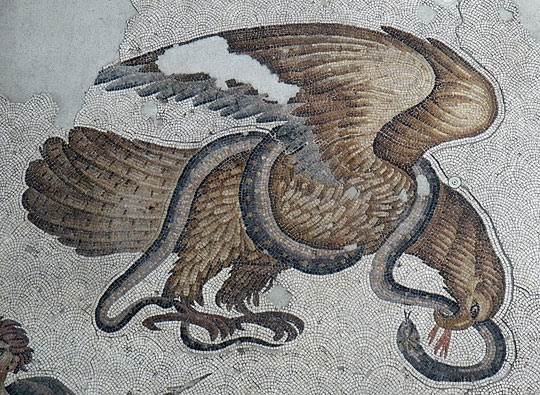
Many of the mosaic figures are from mythology and show quite a bit of violence and blood.
The mosaics in the Ayasofya are the next oldest -- see Part 4 for photos.

Topkapi Palace is filled with tiled walls, ceilings, and floors. Here is a sampling from the harem.


The Archaeological Museums have a whole building, the Cinili Kiosk devoted to ceramics. The building itself is an example of a structure that was entirely clad, inside and out, with tiles.


Contemporary with these ceramics are the tiles in the Blue Mosque -- see Part 7 for photos.

The most modern mosaics were found in an exhibition in the Archaeological Museums -- 20th Century replicas of 5th and 6th Century mosaics found in Ravenna, Italy.


Turkey for Christmas - Part 8

Topkapi Palace


The sultan's residence is composed of numerous pavilions, courtyards, residences, and supporting structures (kitchens, treasury, library). The harem ("forbidden" area) was the residence of the sultan's wives, concubines, children, and their African eunuch guards.

The gate into the main part of the palace grounds.
Pavilions at the far end of the palace grounds -- overlooking the Bosporus and Golden Horn.
A pebble-mosaic walkway. The texture allowed horses to travel the walkways without slipping.
A view of Beyoglu and the Galata Kalesi.
More proof that we were there!


Turkey for Christmas - Part 7

Blue Mosque

(more accurately the Sultan Ahmet Mosque)

Unlike many places, mosques in Istanbul allow non-Muslim visitors inside except during prayers. It's an amazing structure -- truly beyond words.


Inside the mosque courtyard.
This support pillar (one of four) is 5 m (16 ft) in diameter -- massive.

The center dome.